Oil & Gas
DANGOTE'S NEXT MOVE COULD CREATE THE WORLD'S LARGEST REFINERY.
JUMA SULEIMAN
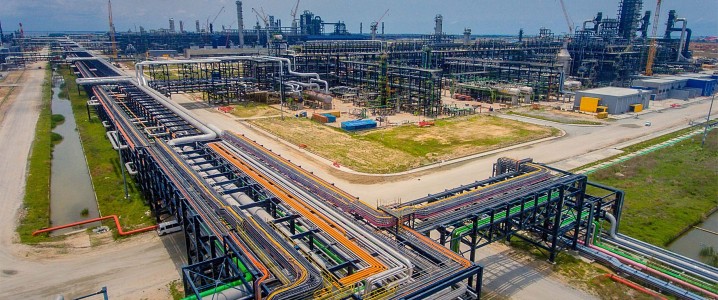
Nigeria's Dangote Refinery is no longer just transforming the country's fuel market. It is increasingly reshaping global trade flows. After raising processing rates to a record 700,000 barrels per day following a debottlenecking program, the refinery has become a major exporter of jet fuel and diesel to Europe, helping reduce West Africa's reliance on imported refined products by nearly 25% year-on-year. Its competitive production costs and broader crude slate have enabled it to maintain exports even as European refining margins have cooled.
The company is now aiming much higher. Dangote plans to construct a second 750,000 barrels per day crude distillation unit, which would lift the Lekki refinery's total capacity to 1.45 million barrels per day and potentially make it the largest refinery in the world, surpassing India's Jamnagar complex. While the proposed 2028 completion date appears ambitious given the lengthy construction timeline of the existing refinery, the announcement reinforces Dangote's determination to cement its position as Africa's dominant refining player and intensifies pressure on Nigeria's state-owned refineries to modernize.
To maximize production, the refinery has diversified its crude supply beyond Nigeria's Bonny Light, incorporating heavier domestic grades alongside imports from the United States, Libya, Cameroon, Ghana and Guyana. This more balanced feedstock has improved gasoline and diesel yields while supporting record jet fuel exports into Europe's Amsterdam-Rotterdam-Antwerp trading hub. At the same time, diesel shipments have strengthened Nigeria's position as a regional supplier, replacing volumes that previously came from Europe, India and Russia.
Dangote's broader vision extends beyond refining. The company is planning fuel storage hubs, including a major facility in Namibia, alongside a continent-wide distribution network targeting underserved African markets and potentially South Africa, the region's largest fuel importer. However, the success of this expansion will depend on overcoming Africa's longstanding infrastructure, storage, logistics and security challenges, which remain the biggest obstacles to building an integrated continental fuel supply network.
Comments

Africa Energy Insights (AEI) is an African platform with latest news, insights and investment report of Energy Sectors. We bridging the gap and mobilizes investment in Energy resources for Sustainable and reliable Energy supply.