Oil & Gas
UKRAINE SAYS IT HIT TWO RUSSIAN OIL REFINERIES OVERNIGHT

Irene Jerry
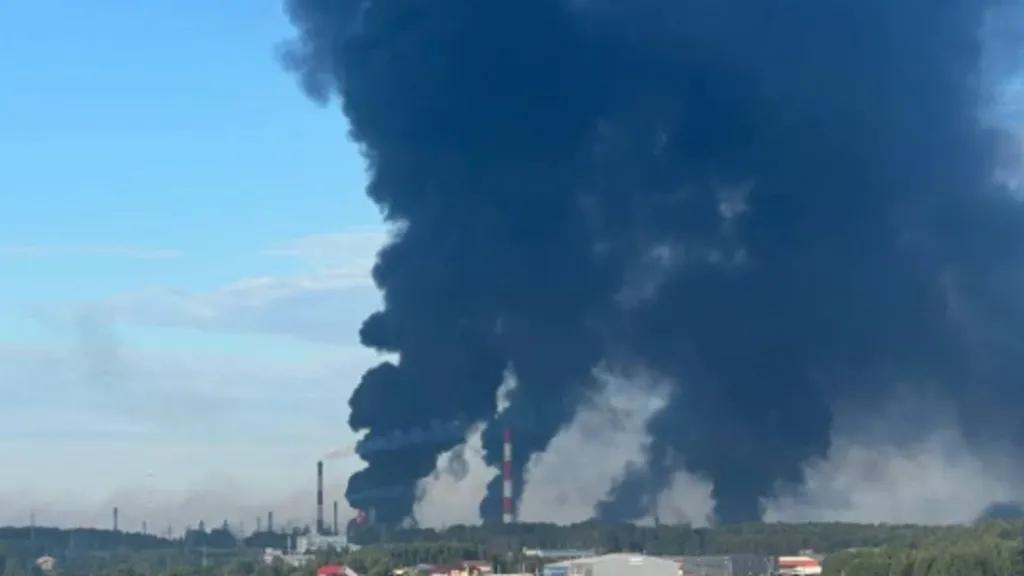
Ukrainian forces hit the Yaroslavl refinery, one of Russia’s largest facilities located about 700 kilometers (435 miles) from the Ukrainian border and also known as Yanos, President Volodymyr Zelenskyy said in a Telegram statement on Thursday. Bashneft’s Novoil facility in Bashkortostan, about 1,300 kilometers from the front line, was also attacked, he said. The strike on Yanos hit four reservoir tanks containing crude oil, leading to a spill, set two reservoirs on fire, and damaged two primary crude-processing units, Ukraine’s Security Service (SBU) said later in a separate Telegram statement.
Earlier, Yaroslavl region governor Mikhail Yevrayev said tanks at the oil refinery were damaged by falling debris after the region repelled its largest-ever drone attack, with 93 unmanned aerial vehicles destroyed overnight. “The emergency services are working to extinguish the fire,” Yevrayev said on Telegram. Images of the Yanos refinery taken by NASA’s Fire Information for Resource Management System showed fresh heat anomalies on Aug. 6. There were no public comments from the head of the Bashkortostan republic.
Ukraine has intensified strikes on Russia’s downstream oil industry after a brief lull in the second half of July, which had allowed refineries to make repairs and increase fuel supplies across the country. In recent days, there were at least nine attacks on eight of Russia’s crude-processing plants, once again putting domestic supplies of gasoline and diesel at risk and threatening higher prices. At the same time, Russia has continued attacking regions across Ukraine, including the country’s Black Sea ports and vessels calling there.
The Yaroslavl refinery, which has a design capacity of about 300,000 barrels a day, has been targeted by multiple Ukrainian drone strikes, most recently in mid-July. The Novoil refinery can process about 150,000 barrels a day and was also attacked last weekend. Overnight, Russia said it shot down 605 Ukrainian drones over its regions, the Black Sea, and the Sea of Azov, with the number of intercepted unmanned aerial vehicles nearing a record high, according to the country’s Defense Ministry.
Comments

Africa Energy Insights (AEI) is an African platform with latest news, insights and investment report of Energy Sectors. We bridging the gap and mobilizes investment in Energy resources for Sustainable and reliable Energy supply.